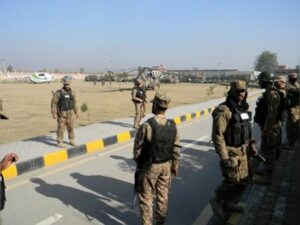
Pakistan soldiers pay price for failing leadership amid rising militancy

Pakistani soldiers are paying a heavy price for a leadership that has lost its grip, according to a report in Blitz following the deadly anti-militancy operation in Orakzai on October 7-8, where 11 soldiers were killed. The report highlights how the army, bogged down by political entanglements and unchecked power, has undermined the very institution it claims to defend.
Pakistan’s security strategy has long been obsessed with external threats from India and Afghanistan, but the real dangers now lie within. Homegrown militancy in KPK, the Baloch insurgency, and rising sectarian violence reflect a failing security doctrine. The army’s inability to tackle these issues, while caught up in political distractions, is costing soldiers’ lives.
The army’s historical tolerance of “good” and “bad” militants has only worsened the situation, as their policy contradictions prevent effective action. Despite endless military operations, the insurgencies continue to thrive. As the army continues its political role, its focus on internal security weakens, and its counterterrorism efforts become increasingly ineffective.
In regions like KPK and Balochistan, where the military is viewed more as an occupying force than a protector, the army’s failure to address the political roots of instability remains evident. The cost of militarized governance is clear: deepened distrust, alienated communities, and an army stretched thin with little to show for it.